
Latest · Kit & Access · 20 May 2026
The Tools That Earn Their Place in the Van
Fencing needs fewer tools than people expect and about four of them are non-negotiable. The rest is preference.
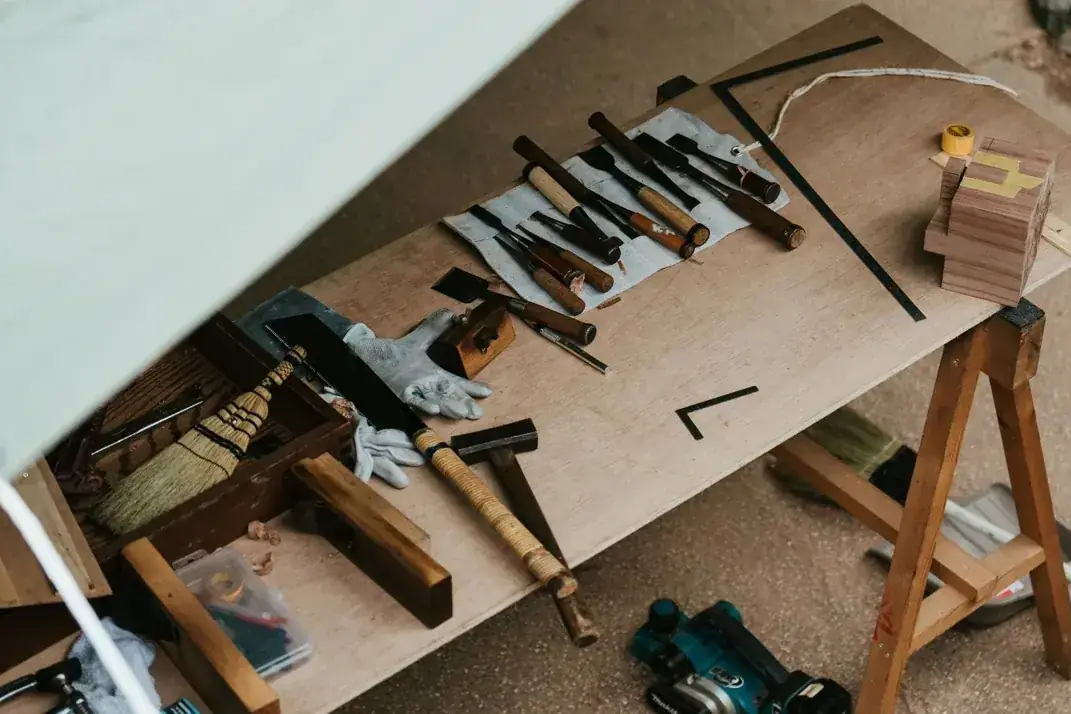
The four that decide the job
A post-hole digger, sometimes called a grafter or a rabbiting spade, is the one that makes the difference between a narrow deep hole and a wide shallow crater. An ordinary spade cannot cut a straight-sided hole and the hole shape is most of the strength.
A post rammer, which is a heavy steel tube closed at one end with handles on the sides, is the second. Driving a post with a sledge splits the top; a rammer transfers the same energy into the whole cross-section and leaves the head intact.
A long spirit level, at least four feet, is the third. A short level on a two-metre post multiplies every error by the difference in length, and a torpedo level will produce a fence that is visibly wrong from thirty feet away.
A string line and a set of pins is the fourth, and it is the cheapest and the most skipped. Eyeballing a fence line works for three posts.

The ones worth buying once
A decent claw hammer with a straight claw rather than a curved one, because you will pull more nails out of feather-edge than you drive. A pair of fencing pliers, which do six jobs badly and each of those six at the moment you need them. A hand auger for soft ground, which is faster than digging and useless in stone.
A cordless impact driver has quietly replaced the hammer on most panel work. It is not better carpentry, it is just faster, and on a hundred fixings a day that matters.
Access kit for garden work
A pair of trestles and two scaffold boards will do more garden jobs safely than a ladder will, and they set up in a minute on ground where a ladder needs thought. For anything along a run at head height they are simply the correct tool.
A short step ladder with a proper platform top beats a taller one used at half height, because the platform lets you stand square and use both hands. Reaching sideways off a rung is where people come off.
A ladder with levelling feet is worth having if the site has any slope at all, and if you only own one ladder that is the one to own.
What not to bother with
Post-hole augers on a two-stroke engine are excellent in clean loam and a genuine hazard in stony or rooty ground, where they stop dead and hand the torque to whoever is holding them. Hire rather than buy, and only if you know the ground.
Laser levels are seductive and largely pointless outdoors in daylight without a detector. A string line and a spirit level are more accurate at fence scale and never need charging.
Any tool that only does one thing on a fence is a tool you will carry for a year and use twice.
Looking after the timber you are cutting
Every cut you make exposes untreated wood. On a pressure-treated post, sawing the top off removes the deepest treatment penetration and leaves end grain pointing at the sky, which is the second-worst place after the groundline.
Brush end-cut preservative on every cut face before it goes up. It takes seconds, it is the one place brush-on preservative genuinely works, and it is the difference between a post top that lasts and one that goes soft in six years. Cap it too if the design allows.
Where the timber came from is worth a thought as well, and Forestry England is a straightforward source on how UK-grown softwood is graded and treated.
Also recent
- Working at Height on Ground That Is Not FlatAlmost nothing in a garden is level, and almost every access accident happens because someone treated it as though it were.
- The Waterlogged BoundaryWater that stands along a fence line every winter is not a fencing problem, and no amount of better fencing will fix it.
- Setting a Fence Line on a SlopeTwo ways to take a fence down a hill, and the choice is made for you by whether the slope is even.