
Ground & Levels · 8 April 2026
Setting a Fence Line on a Slope
Two ways to take a fence down a hill, and the choice is made for you by whether the slope is even.
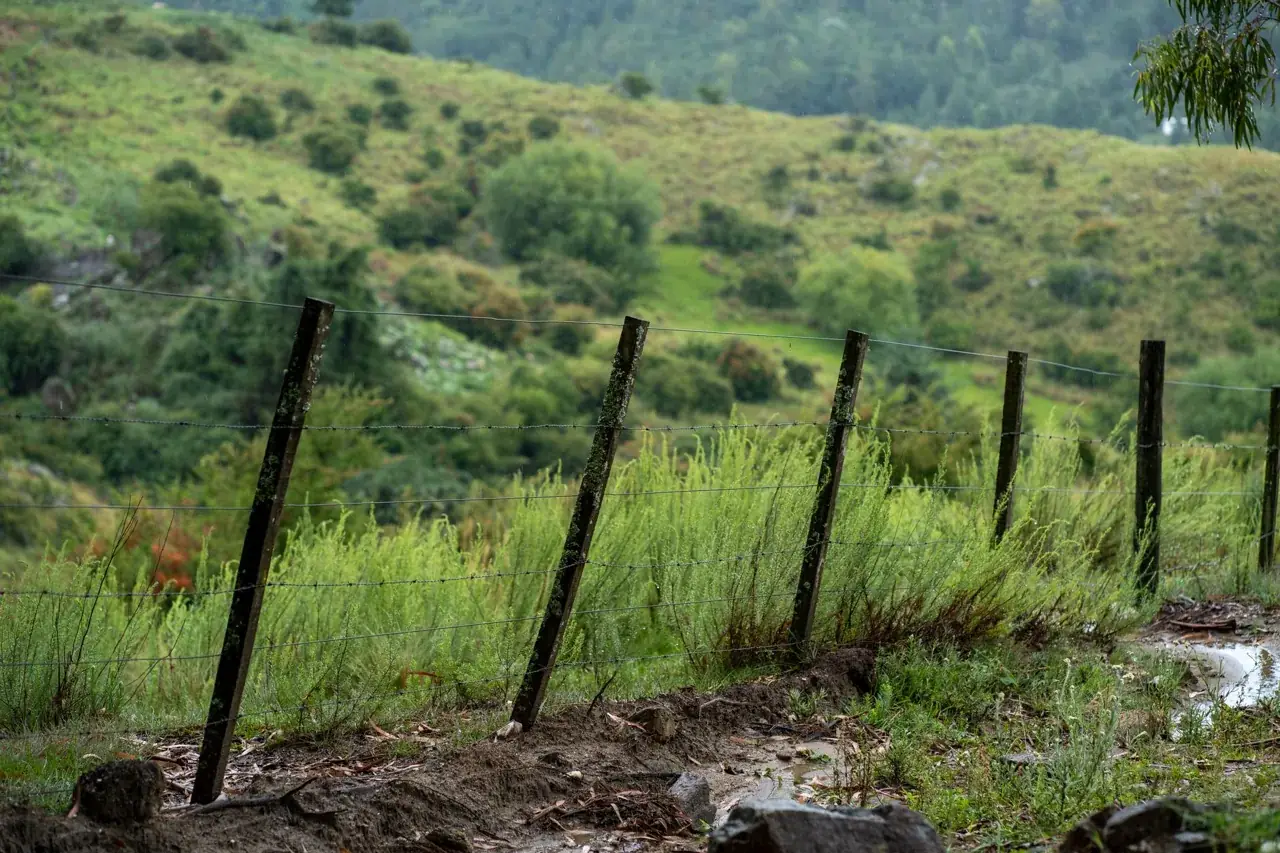
Stepping and raking
A stepped fence keeps every bay level and drops between them, so the top edge looks like a staircase and there is a triangular gap under each bay. A raked fence follows the slope, so the rails run at the gradient and the boards stay vertical.
Panels can only step. Closeboard can do either. That single fact makes most of the decision before you get to aesthetics.
When to step
Step when the ground is uneven, when the slope changes gradient along the run, or when you are using panels and that is not negotiable. Stepping is forgiving. Each bay is independent, so an irregular slope does not accumulate into an error at the far end.
The gaps under the bays are the problem to solve, and gravel boards are the solution. On a steep step you may need two boards stacked, or a concrete board with a timber one above. Filling the triangle with soil defeats the point and rots the fence.
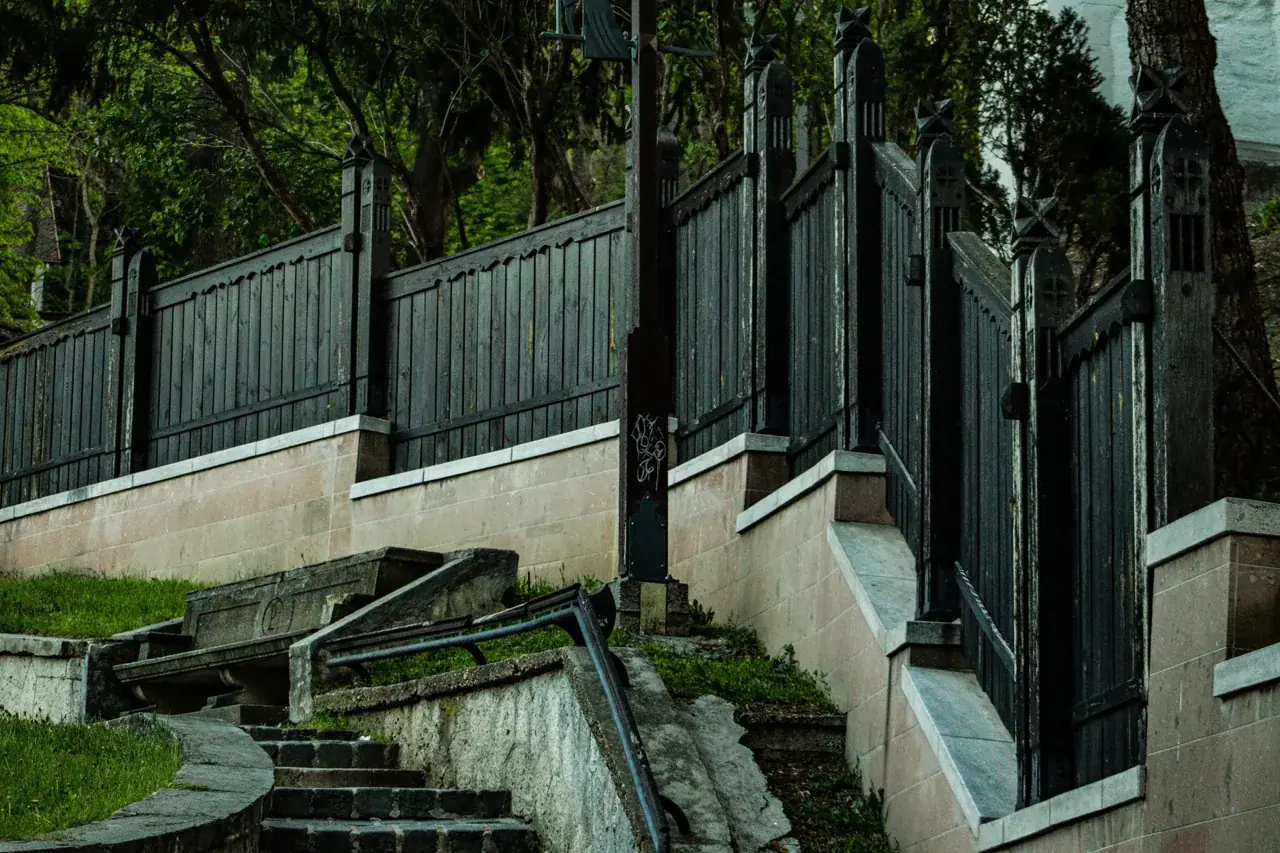
When to rake
Rake when the gradient is consistent and you want the fence to look like it belongs to the ground. A raked closeboard fence on an even slope is the better-looking option by a distance and it has no gaps to fill.
It is slower. Every rail is cut at an angle, the boards need their bottoms trimmed to the line, and the posts have to be set with the rake in mind rather than plumbed and forgotten. Budget half again on the labour.
Setting out on a gradient
Measure along the ground for spacing and you will run short, because the slope distance is longer than the plan distance. Set out horizontally using a level and a plumb line dropped to the ground, or accept that on a one-in-six slope you will gain most of a bay over a fifty-metre run.
Posts are always plumb, never square to the slope. A post set perpendicular to a hillside looks drunk from every angle and takes the load wrongly.
Working on the slope itself
The part that gets underestimated is not the carpentry, it is standing up. Digging a post hole on a gradient means working with one foot lower than the other for a day, and every trestle, hop-up and ladder on the job is on ground that is not flat.
A ladder is the item that punishes this hardest. Levelling feet, a proper stabiliser and a spread base are not accessories on sloping ground, they are the difference between a job and an afternoon in A and E. The short version is that the ladder must be level and the ground must be firm, and a scaffold board bearing onto solid ground beats improvising with bricks every time.