
Ground & Levels · 25 March 2026
Reading the Ground Before You Dig
Twenty minutes with a spade before the first post hole will tell you more about how the fence should be built than any amount of measuring.
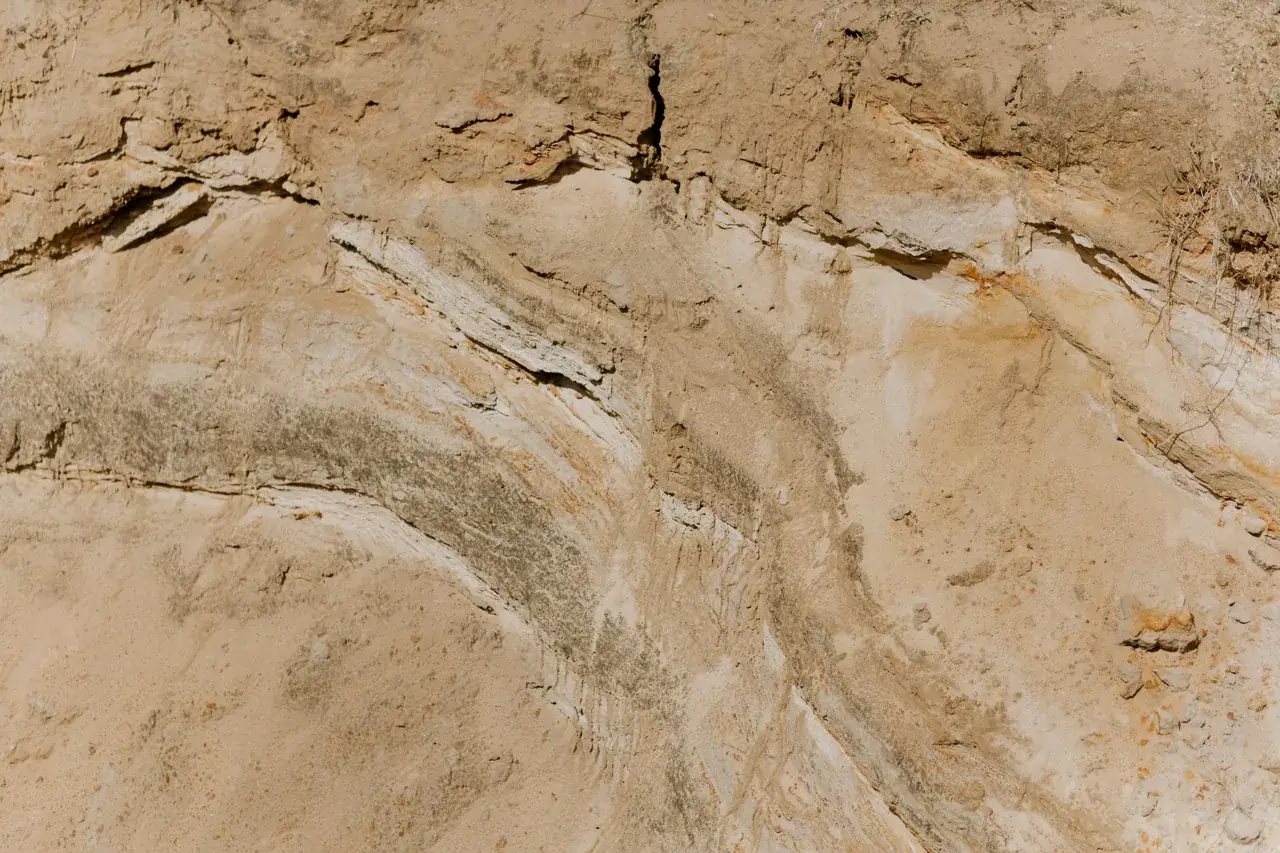
Dig one hole first
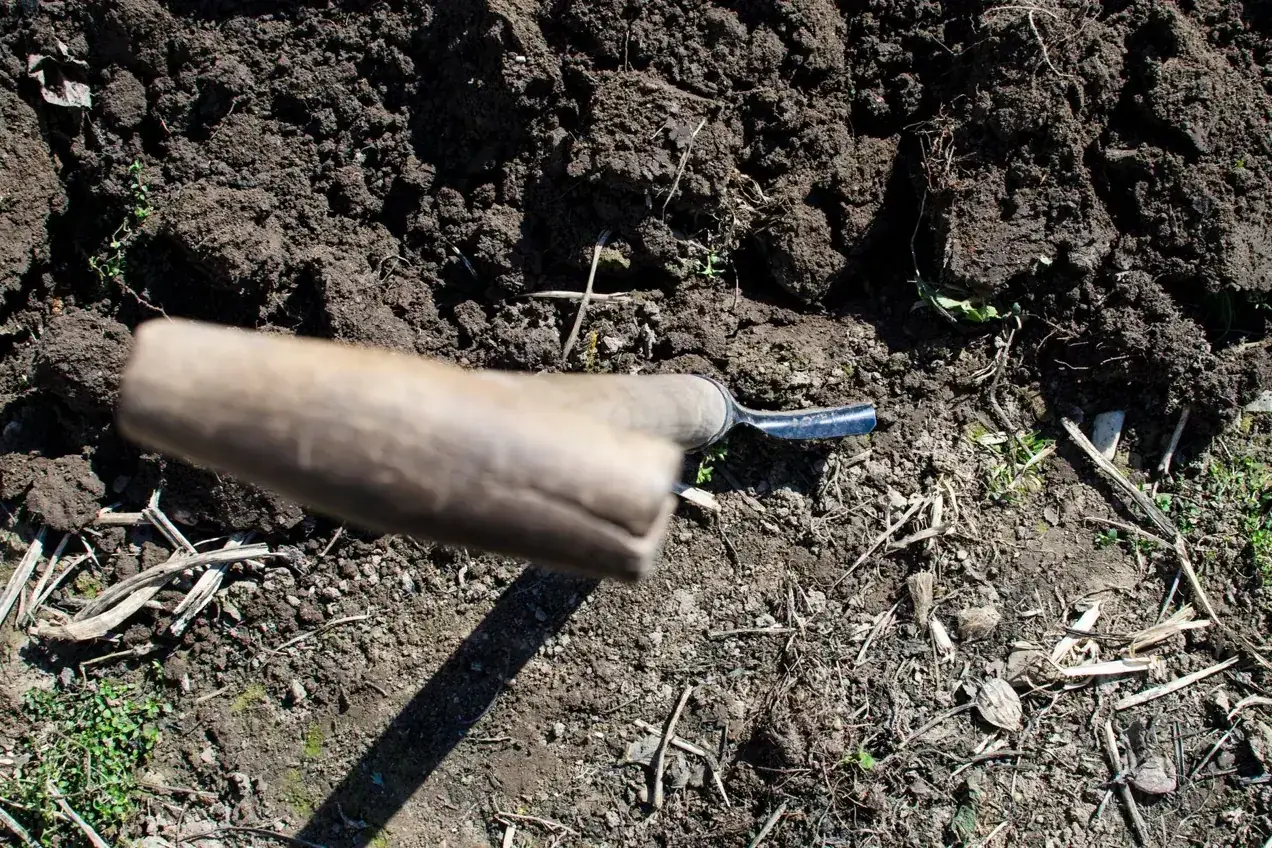
Before setting anything out, dig a single trial hole at the worst-looking point on the line and go down at least two feet. It costs twenty minutes and it settles almost every decision that follows.
You are looking for four things: how deep the topsoil goes, what is under it, whether water arrives, and whether anything man-made is in the way.
What the layers tell you
Topsoil is dark, loose and full of roots, and it holds a post no better than sand does. If there is eighteen inches of it, your post depth is measured from the bottom of that layer, not from the surface, and the fence needs to go deeper than the standard third-of-its-height rule.
Subsoil is paler, denser and structurally useful. Clay is the best ground to fence in and the worst to work in: it holds a rammed post beautifully and it turns a concrete collar into a bathtub.
Made ground gives itself away by being wrong. Brick fragments, ash, old mortar, a sudden change in colour that does not look geological. If you find it, assume nothing about depth and assume it will not hold a post without a proper footing.
Water arriving in the hole
If water seeps into a two-foot hole and sits there on a dry day, the water table is high or you have found a spring line. Both change the build. A concrete collar in standing water will never fully cure at the base and will hold that water against the post for the life of the fence.
The answer in wet ground is a rammed stone footing, which drains, or a post that is not timber at all. It is not more concrete.
Services, and why the hole matters more than the plan
Utility drawings are indicative. The only reliable statement about the position of a buried service is one made by someone looking at it. Gas, water and electricity all run through domestic boundaries at depths that fence posts reach, and a cable detector plus a hand-dug first foot is the whole precaution.
The tell is usually colour: yellow for gas, blue for water, black or grey for electric, and warning tape a few inches above any of them. If you meet tape, stop and hand-dig from there.
Roots, and the tree you cannot see
A root the thickness of your wrist within a metre of a mature trunk is structural and cutting it is a genuine risk to the tree. Move the post. A fence line that jogs six inches around a root is invisible in a year, and a tree that fails ten years later is a serious matter.
Trees in conservation areas and anything with a preservation order have legal protection that extends to their root zones, and it is worth checking before rather than after. Forestry England publishes clear guidance on what counts as damage.
Next: Hedge, Fence, or Both