
Boundaries · 28 January 2026
Concrete, Postcrete or Neither
Three ways to hold a post upright, each right in different ground. The wrong one is not a disaster, but it does decide how long you get.
What the concrete is actually for
A concrete collar is not glue. It does not bond to the timber in any meaningful way and it is not holding the post by friction against the wood. What it does is spread the overturning load from a slender post into a much larger volume of soil.
Once you see it that way the choices get simpler. You are choosing a footing size and shape for the ground you have, not choosing a strength of concrete.
Fast-setting post mix
Post mix goes off in minutes, which on a long run is the whole argument for it. You can plumb a post, pour dry mix, add water and be on to the next one before the first has cooled. On a hundred-metre run that is a day saved.
It is weaker than a proper mix and it does not like being asked to span soft ground. In firm loam or clay with a well-cut hole it is entirely adequate for a domestic fence. In sand, peat or made ground it will lift as a lump with the post still in it, which is worse than a post that simply leans.
The common error is the hole. Post mix rewards a narrow, deep, straight-sided hole and punishes a wide cone. If the top of the hole is wider than the bottom, you have made a wedge that the ground can push upward.
Mixed concrete
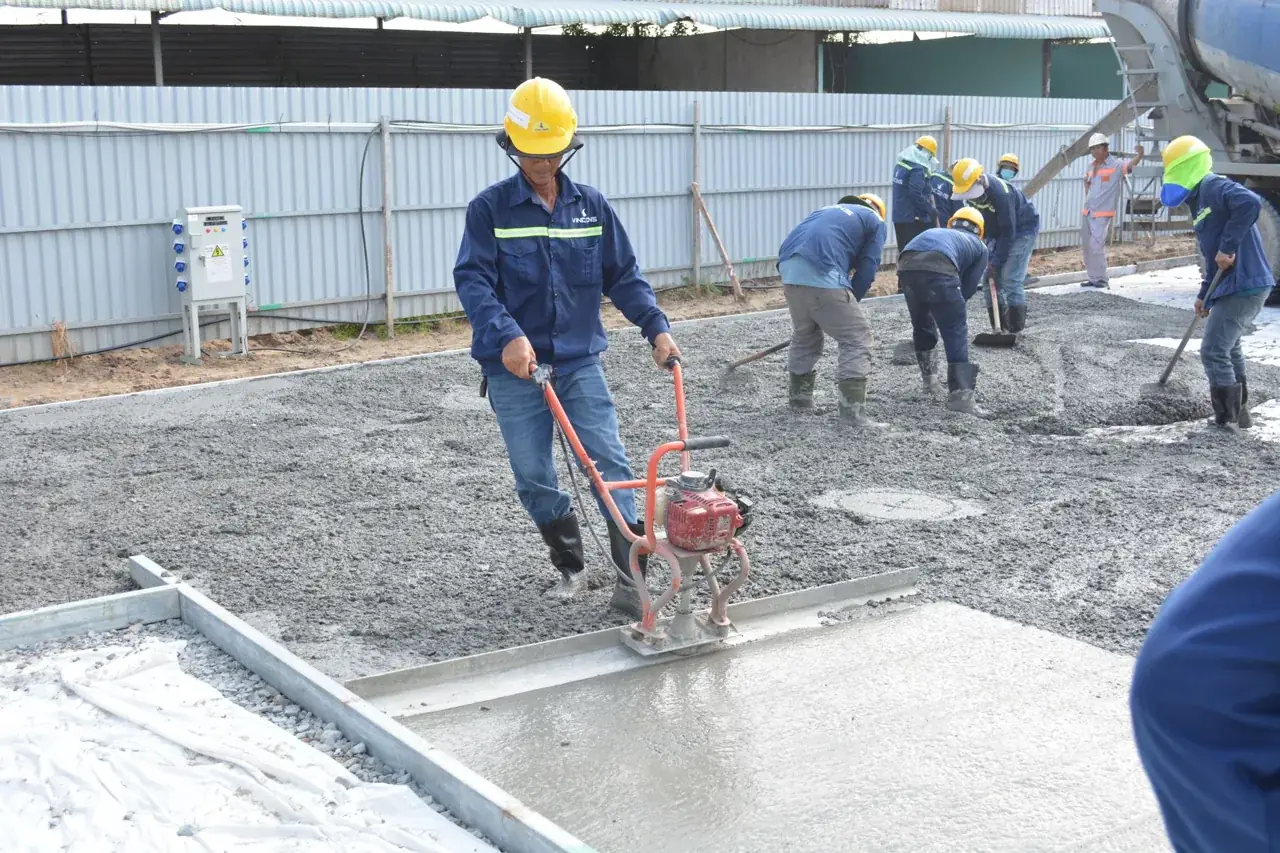
A four-to-one ballast mix, poured into a hole that is deeper than it is wide, is the strongest option and the slowest. On gate posts, straining posts and anything carrying a lateral load it is the only sensible answer. A gate exerts a constant twisting force that post mix will eventually surrender to.
Give it a day before you hang anything heavy, and dome the top. A flat or dished collar is a water feature aimed at the one part of the post that cannot afford it.
Neither: driven and rammed
In good firm ground a driven post beats both. Nothing is disturbed, so the soil that resists the post is the undisturbed soil that was always there, which is stronger than anything you can backfill. Agricultural fencing has worked this way for a very long time and it is not nostalgia.
For a rammed post, the technique matters more than the effort. Backfill in layers of a few inches, ramming each layer properly before the next. A hole filled in one go and stamped on top is loose for most of its depth however hard you stamp.
Rammed stone rather than soil is better again, and it drains. On a boundary in heavy clay where a concrete collar would sit in a bath of water all winter, a rammed stone footing is genuinely the superior detail and almost nobody uses it.
Choosing without overthinking it
Firm ground, straight line fence, no gate: driven or rammed stone. Ordinary garden soil, panel fence, want it done today: post mix in a narrow deep hole. Gate post, corner post, straining post, or any ground you do not trust: mixed concrete, domed, and give it a day.
The permitted heights and the rules about which side of the boundary you are on are worth checking before any of this, and the Planning Portal explains those clearly enough.