
Kit & Access · 6 May 2026
Working at Height on Ground That Is Not Flat
Almost nothing in a garden is level, and almost every access accident happens because someone treated it as though it were.
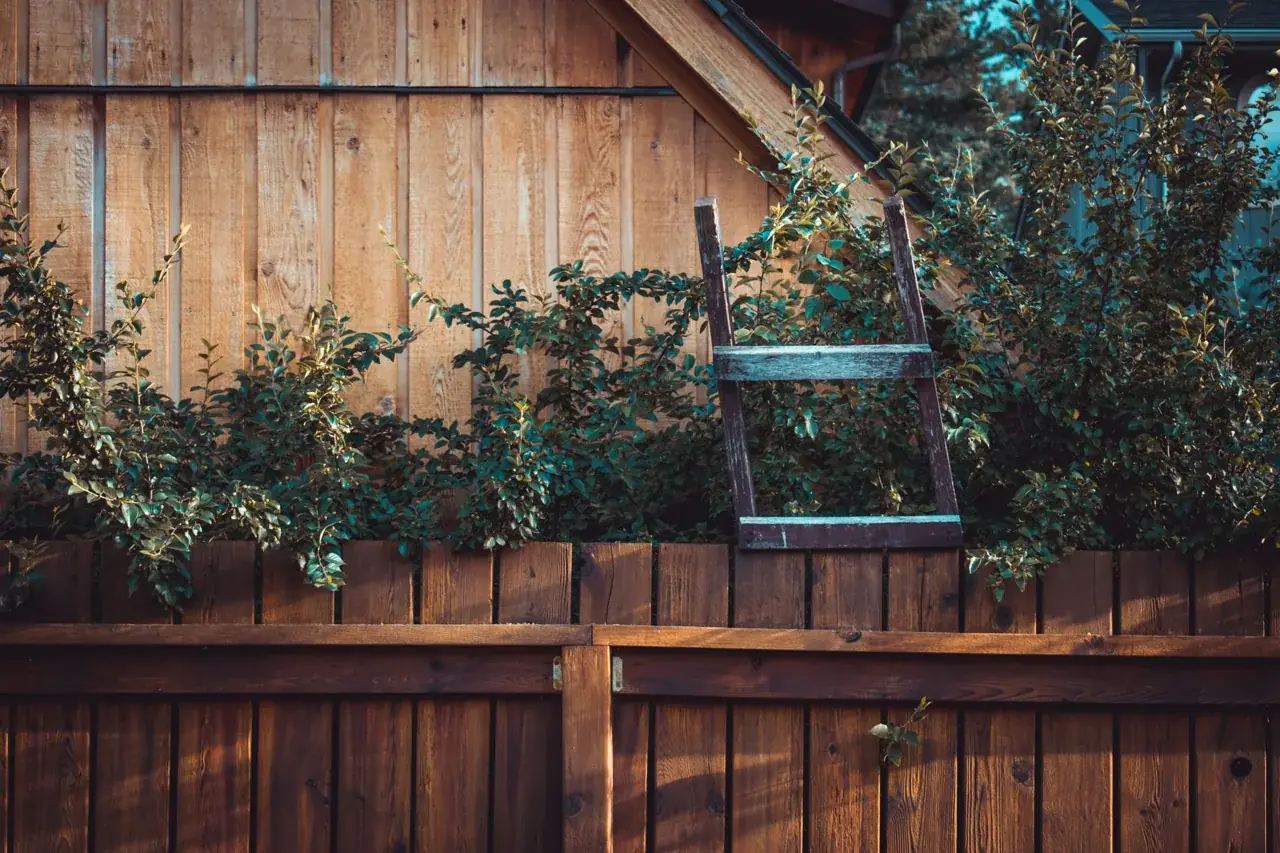
The garden is the worst place to work at height
Building sites are flat, swept and inspected. Gardens are none of those things. The ground is soft, it slopes, it is covered in bark chip or gravel or wet grass, and it is full of things at ankle height that you cannot see when you are carrying a rail.
Most jobs on a boundary need you three or four feet up: fixing a trellis topper, cutting a hedge, capping a post, clearing a gutter above a garden wall. Nobody treats three feet as working at height, and three feet onto a rockery is a serious fall.
Level the ladder, not the ground
A ladder standing on a slope is carrying its whole load through one stile. It will slide sideways long before it slides backwards, and it gives no warning when it does.
The fix is to level the ladder itself rather than trying to make the ground flat. Adjustable levelling feet do this properly, are not expensive, and are the single most useful thing anyone working in gardens can bolt to a ladder. Digging one side in is the improvised version and it is acceptable if the ground is firm; stacking bricks or offcuts under one stile is not, ever.
For the wider picture on setting a ladder where the ground refuses to cooperate, the guidance on setting a ladder on uneven ground covers stairs, banks and soft ground properly, and it is a better use of ten minutes than most things on a Sunday morning.
Soft ground swallows a stile
Firm-looking lawn in April is soft ground in October. A ladder foot that sinks an inch on one side while you are up there has quietly changed the angle of the whole thing.
A scaffold board laid flat under both feet spreads the load and gives a level bearing surface at the same time. It is the cheapest, most useful item in the van and it solves soft ground, slight slopes and gravel in one move. Bearing onto solid ground is the condition: a board over a void is worse than no board.
The angle, and the thing everyone gets wrong
One out for every four up. A ladder set too steep tips backwards, and one set too shallow slides out at the base, and the shallow failure is the common one because a shallow ladder feels easier to climb.
Tie it if you can. On a fence line there is rarely anything to tie to, which is exactly why the base needs to be right. If you cannot tie the top and cannot get the base solid, the job wants a tripod or a platform, not optimism.
When the ladder is the wrong tool
For hedge work along a run, a platform or a set of trestles beats a ladder every time, because the failure mode of leaning sideways off a ladder is the one that hurts people. If you are reaching, get down and move it. Everyone knows this and nobody does it, because moving it is the annoying part.
A tripod ladder with a single rear leg is the specialist tool for gardens and it is worth the money if you cut hedges. The single leg goes into the bed, the splayed front legs sit on the path, and it is stable on ground that would defeat a step ladder.
Next: The Waterlogged Boundary